How Much Should You Tip On A Free Walking Tour In Singapore?
A plain answer to what a free walking tour in Singapore actually costs, how the pay-what-you-want model works, when you hand over the money, and how to judge a fair amount for yourself.
How Much Should You Tip On A Free Walking Tour In Singapore?
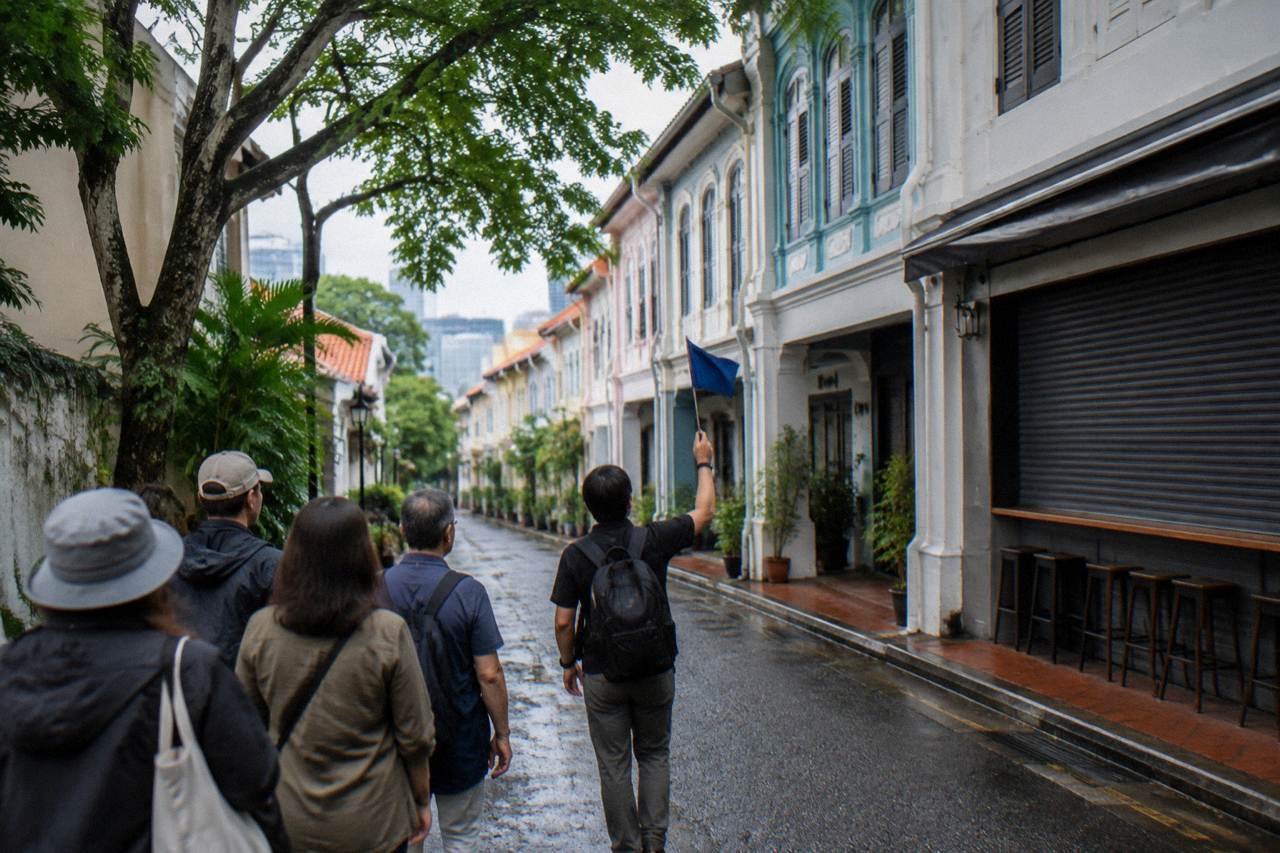
The walks are pay what you want: you reserve a free spot, the walk costs nothing up front, and at the end you hand the guide whatever you think the three hours was worth. The number is entirely your judgement call.
The mechanism is simple, and once you understand it, deciding on an amount becomes much less mysterious.
The mechanism is this. On GuruWalk you browse the walk's page, pick a date, and reserve a spot for free. On freetour.com, the other platform, the same applies for its four Singapore walks. You pay nothing at booking. You show up at the meeting point the page names. You walk. At the end, the guide collects what each walker chooses to give, in cash, and that is the entire transaction. The platforms do not process the payment and take no cut of what you hand over. The amount is the walker's choice, full stop.
Because the amount is yours to set, the useful question is not "what is the number" but "what is the walk worth to me". The main things that go into that judgement are real and knowable in advance: how long the walk runs, who guides it, how well it is rated, and what kind of route it takes. The table below pulls together the figures for the most-reviewed English-language walks on the two platforms, so you can see the spread before you decide what a walk deserves.
| Walk | Platform | Duration | Rating and reviews | Meets at |
|---|---|---|---|---|
| 3 Hours, Chinatown To Tekka Market | GuruWalk | 3 hours | 4.76 out of 5 across 1,010 GuruWalk reviews | Pagoda Street, Chinatown |
| Chinatown, Little India, Kampong Glam | GuruWalk | 3 hours | 4.95 out of 5 across 276 GuruWalk reviews | Telok Ayer MRT Station |
| 2 Hours 15, Chinatown Stories Walk | GuruWalk | 2 hours and 15 minutes | 4.96 out of 5 across 148 GuruWalk reviews | Pagoda Street, Chinatown |
| Chinatown To Merlion Park Walk | GuruWalk | 2 hours and 45 minutes | 4.9 out of 5 across 139 GuruWalk reviews | Chinatown MRT Station |
| 2 Hours 30, Kampong Glam Walk | GuruWalk | 2 hours and 30 minutes | 4.94 out of 5 across 146 GuruWalk reviews | Lavender MRT Station |
| 2 Hours 30, Little India Walk | GuruWalk | 2 hours and 30 minutes | 4.98 out of 5 across 61 GuruWalk reviews | Little India MRT Station |
| 2 Hours 30, Colonial To Contemporary | freetour.com | 2 hours and 30 minutes | 9.5 out of 10 across 26 freetour.com reviews | City Hall MRT Station |
Read the two rating scales separately. GuruWalk rates out of 5; freetour.com rates out of 10, and the two are never converted into each other here. A 9.5 out of 10 on freetour.com and a 4.95 out of 5 on GuruWalk are both strong scores on their own scales, from review pools of very different sizes. The review count beside each rating is what tells you how much weight the score can bear: 1,010 reviews is a substantial body of walkers, while 26 reviews is a younger listing still building its record.
If you want a fuller picture of the whole scene before settling on a walk, the free walking tours in Singapore guide lays out all eighteen, and the companion piece on whether these tours are really free covers the booking side of the model in more depth.
How Much Should You Pay On A Free Tour?
You pay what the walk was worth to you, and nothing before that point. There is no fixed price, no minimum, no deposit and no upfront charge on any of the eighteen Singapore walks on GuruWalk or freetour.com. The only money that changes hands is the cash you choose to give the guide at the end. Treat it as a price you set yourself, after the service, on the evidence of the walk you actually received.
Framing it that way removes most of the anxiety. You are not guessing a number in the dark before the walk; you are reacting to a real experience after it. A three-hour walk that held your attention the whole way is worth more to most people than a walk that felt thin, and only you were there to tell the difference. The pay-what-you-want model pushes that judgement onto the walker deliberately. It is the same logic as a busker's hat or a museum donation box: the provider sets no price, and the audience prices the performance.
The walks themselves vary in length, which is the one objective input you have in advance. The shortest runs two hours, the longest three. On a per-walk basis, a three-hour route asks more of the guide's time than a two-hour route, and many walkers factor that in. But duration is a floor consideration, not a formula. A brilliant two-hour walk can easily be worth more to you than a flat three-hour one, and the model is built to let you say so with your money.
One thing worth being clear about: the food walks are a different case. Chinatown's two food walks, the 2 Hours 45 Hawker Hop and the 3 Hours Heritage And Food Trail, are pay-what-you-want walks where the food is bought separately, in cash, at the stalls. The walking guide gets what you choose to give; the stallholders get paid for what you eat. Two separate transactions, and neither changes what the walk itself costs.
For a sense of scale on the most-established option: 3 Hours, Chinatown To Tekka Market, led by the guide Offbeat, is rated 4.76 out of 5 across 1,010 GuruWalk reviews, meets on Pagoda Street in Chinatown, and runs three hours. You can see this free tour on GuruWalk, where the figures above come from. It is the single most-reviewed walk on the Singapore roster, and its review pool is large enough that the rating carries real weight.
What Do Guides Expect?
Guides on Singapore's free-tour platforms expect no fixed payment, because the model they signed up for works on tips alone, with each walker free to value the walk differently. Their real expectation sits in the quality of the walk rather than in any number, and by choosing this model they have already accepted that some walkers will give little while others give generously.
It helps to understand what the guides are actually doing. These are independent operators: Offbeat, Paul, Stephen, Monster Day Tours, Lah Kopi Tours, Cecilia, Michael, Ping and Angel on GuruWalk; Avi, Chew Keng Kiat, Polly and Michael Tan on freetour.com. They are not employees of the platforms and they are not employees of a tour company in the traditional sense. They list a walk, set a meeting point, and turn up. Everything they earn from the walk comes from what the walkers hand over at the end.
That structure is why the model works at all. A guide with a guaranteed fee would be selling tickets. A guide on pay-what-you-want is making a bet that the walk will earn its keep, walk after walk, and the ratings on the roster suggest the bet usually pays off: the featured walks carry scores from 4.76 to 5 out of 5 on GuruWalk and 7.7 to 9.9 out of 10 on freetour.com. Those are voluntarily given ratings from people who took the walk and then chose to review it, which is itself a signal about how walkers feel at the end of these tours.
What the guides do expect, in the practical sense, is engagement. You reserved a spot; the guide planned for you. If you cannot make it, cancelling the reservation on the platform is the courteous move, because a no-show takes a place another walker could have used. That costs you nothing and it is the one obligation the booking actually carries. Beyond that, showing up on time at the stated meeting point, the landmark the roster names, is the whole of your side of the arrangement until the walk ends.
The meeting points themselves are simple, well-known places: Pagoda Street in Chinatown, Telok Ayer MRT Station, Raffles Place MRT Station, City Hall MRT Station, Lavender MRT Station, Little India MRT Station, the URA Centre on Maxwell Road. Most of the eighteen walks start in Chinatown, with one Little India walk, one Kampong Glam walk and a few Civic District and Raffles Place starts filling out the roster. None of that affects what you pay; it only affects where you stand at the start.
Do You Pay Before Or After?
You pay after the walk, never before. All eighteen Singapore free walking tours collect payment at the end, in cash, handed directly to the guide, and neither GuruWalk nor freetour.com charges anything at booking. There is no deposit, no card hold and no online prepayment. If anything asks you for money before a free walk begins, it is not the model these listings use, so stop and check what you are actually booking.
The after-the-walk timing is the load-bearing wall of the whole model. It is what makes the transaction honest in both directions. The guide cannot phone it in and collect regardless, because the walkers have not paid yet; the walker cannot consume the walk and slip away without deciding what it was worth, because the moment of judgement arrives in person, face to face, at the end of the route. The model works because both sides meet that moment.
Practically, this means bringing cash. The payment is cash in hand on the walks, so a walker with no notes at the end of three hours has a problem the model does not solve for them. Plan for it before you leave your hotel: whatever amount you land on, you will need it in a form you can hand to a person standing in front of you. This is the one piece of practical preparation the pay-what-you-want model genuinely demands.
It also means the decision point is compressed. You will make the call in the last minutes of the walk, usually while the guide is wrapping up and saying goodbye to the group. Some walkers decide in advance, a figure in their head that they adjust up or down as the walk goes. Others decide in the moment. Either way works, but walkers who have thought about the factors beforehand tend to feel more comfortable at the end.
One timing note for the walk itself: these are outdoor, on-foot tours through city streets, and Singapore's calendar is full of free things to see along the way. If your walk ends near the waterfront, the Spectra light and water show at Marina Bay Sands is free to watch from the Event Plaza, and the Garden Rhapsody show at Gardens by the Bay is free from the ground at Supertree Grove, at 7.45pm and 8.45pm. A walk that ends in the early evening can roll straight into a free show, which is a nice way to end the day without spending another dollar beyond what you gave the guide. The Marina Bay free walk guide covers that stretch of waterfront in full.
What Counts As A Fair Tip?
A fair tip is whatever the walk was worth to you, decided in cash at the end. No operator or platform publishes a figure, so fairness is a judgment you make on duration, the guide's effort, how much you learned, and the value of the experience against what else you would have paid that day. Treat it as a purchase you choose to make, not a number you are obliged to hit.
Start with duration, because it is the only factor you know for certain before you arrive. The roster runs from two hours to three, and the guide's time scales with it. A three-hour route, like 3 Hours, 700 Years Of History, rated 5 out of 5 across 486 GuruWalk reviews, or 3 Hours, Chinatown To Tekka Market, asks more of a guide than the two-hour Chinatown Night Walk. Many walkers let length set a baseline and then move off it in either direction based on quality.
Then weigh what the walk actually did. Some walks are broad: Chinatown, Little India, Kampong Glam, led by the guide Stephen, rated 4.95 out of 5 across 276 GuruWalk reviews, covers three historic quarters in three hours from Telok Ayer MRT Station. Others go deep on one district: the 2 Hours 15 Chinatown Stories Walk, led by Michael, rated 4.96 out of 5 across 148 GuruWalk reviews, stays in Chinatown from Pagoda Street. A broad sweep and a deep single-neighbourhood walk are different products, and what felt more valuable to you is a legitimate basis for what you give.
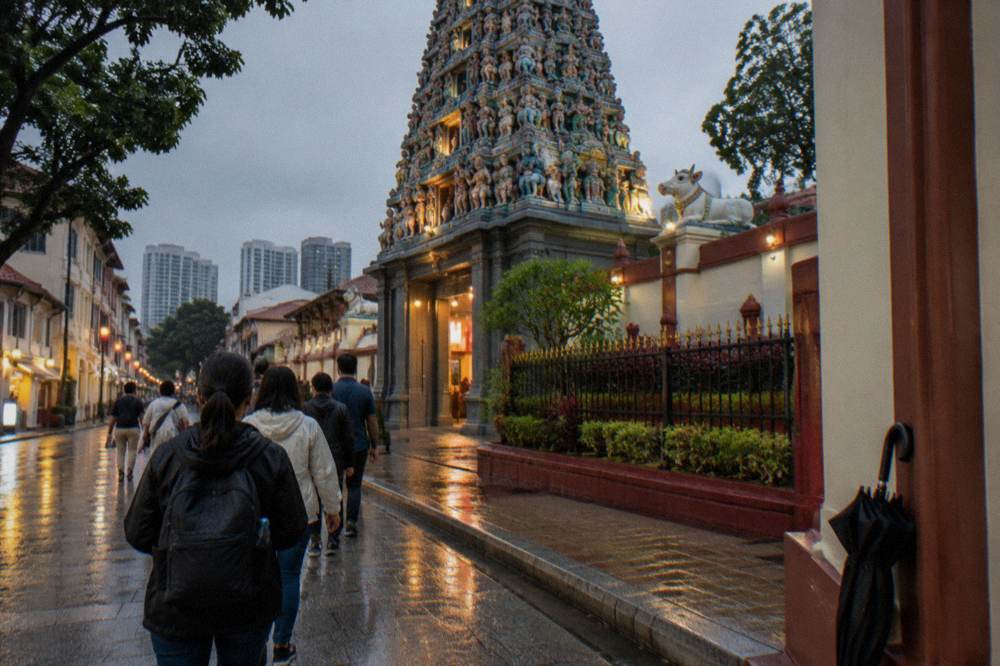
For walkers who want the three-quarters sweep in one walk, Chinatown, Little India, Kampong Glam is the direct option: a three-hour pay-what-you-want walk on GuruWalk, meeting at Telok Ayer MRT Station, rated 4.95 out of 5 across 276 GuruWalk reviews. Its GuruWalk page lists the meeting point and the dates it runs.
Fairness also has a comparative edge, and it is worth using it. A paid guided tour in a major city is a real purchase with a real price attached. A free walking tour delivers a comparable experience, a guided route through real districts with a live human explaining them, and then lets you name the price afterwards. When you frame the payment against what a ticketed tour of the same length would have cost, the fair range for a walk you enjoyed usually becomes obvious on its own. That comparison is entirely yours to draw.
The last fairness factor is the guide's own record. Ratings and review counts are printed beside every walk precisely so you can weigh them: a 4.98 out of 5 across 61 GuruWalk reviews on the Little India Walk, a 9.5 out of 10 across 26 freetour.com reviews on Colonial To Contemporary. A strong sustained rating tells you many walkers before you valued these walks enough to rate them highly after paying what they chose. It is not a price signal, but it is a quality signal, and quality is what you are paying for at the end of the route.
Whatever you decide, decide it as a buyer, not as a guest. The guide chose a model with no floor and no ceiling; the honest response is to use that freedom genuinely, give what the walk merited, and let the amount say what you actually thought of it. That is the whole bargain, and on the evidence of eighteen live listings and thousands of walker ratings, it holds up on both sides.
For help choosing among the walks themselves, the comparison of which free walking tour in Singapore is best works through the roster walk by walk, and the parent guide on Free Things To Do In Singapore covers everything else the city offers without a ticket.
Common Questions About Tipping On Free Walking Tours In Singapore
How Much Should You Tip On A Free Walking Tour In Singapore?
The walks are pay what you want: you reserve a free spot on GuruWalk or freetour.com, pay nothing up front, and hand the guide cash at the end in whatever amount you judge the walk was worth. Duration, the guide's effort and how much you took from the walk are the sensible inputs to that judgement.
Do You Pay Before Or After A Free Walking Tour?
After, always. Nothing is charged at booking on any of the eighteen Singapore walks, no deposit is taken, and the payment is cash in hand to the guide at the end of the route. Bring notes, because the transaction happens in person on the street.
Is A Free Walking Tour Actually Free?
The walk itself is free to book and free to walk: pay what you want means the price is zero until you choose to give one. What is never free is getting there, since nothing on the MRT or bus network is free for visitors, and on the two Chinatown food walks the food is bought separately, in cash, at the stalls.
Do Guides On GuruWalk And Freetour.com Expect A Set Amount?
No. The walk is free to reserve and you pay the guide at the end, with the amount left to your own choice. Neither platform prescribes a figure, though some guides note a suggested tip on their own walk listing, so read the walk's page before booking.
Does The Walk's Rating Tell You What To Pay?
No, but it tells you what previous walkers thought. Ratings like 4.76 out of 5 across 1,010 GuruWalk reviews or 9.5 out of 10 across 26 freetour.com reviews are quality signals from people who took the walk and paid what they chose. Quality is a fair input to your own amount; the rating is not a price list.
What Happens If You Give Nothing?
The model has no enforcement: the amount is the walker's choice, and the guide has no claim on you. But the guide walked the route on the strength of your reservation and earned nothing guaranteed for it, so a walk you valued and paid nothing for is a poor exchange for the person who provided it. If the walk was genuinely worth little to you, a small amount says so honestly; if it was worth a lot, the amount should say that too.